To see a video about Benefits Check Up and the services they provide, CLICK HERE
Find programs that can help you pay for prescription drugs, health care, meals, utility bills, and more.
See if you’re eligible and apply for Extra Help paying for your Medicare prescription drug costs.
My Medicare Matters:
Find easy-to-understand information about Medicare's prescription drug coverage (Part D) and learn about services Medicare pays for to keep you healthy. Information is also available in Spanish.
Senior Housing Locator
Find senior housing options, including assisted living, residential care, nursing & rehabilitation homes, CCRCs and independent living retirement communities.
https://www.benefitscheckup.org/moreprograms.cfm?partner_id=0

Tuesday, April 27, 2010


Two-Lap Books give pleasure to many adults with Alzheimer's Disease

Written by a daughter, Lydia Burdick, for her mother who was diagnosed with Alzheimer’s, these special books are Alzheimer’s activities that offer the perfect way for family and friends to visit with a loved with, and for caregivers to provide a more personal touch.
Two-Lap Books are interactive and fit comfortably over two laps. Charmingly illustrated by Jane Freeman. the helpful Conversation Prompts spark conversation and reminiscence on each page. Additionally, Happy New Year to You! has “old-time” sample songs for reading partners to sing together.
Reading Two-Lap Books together is an instant activity — no planning or preparation is required. Open to a favorite illustration, read from start to finish, or select just a page or two to spark an exchange. Tips on how to promote engagement with the book are provided ó or just use your own creativity! Here is a natural and unlimited opportunity to rebuild connections for the person with dementia, stroke, multiple sclerosis, and related disorders.
Researchers have found in a number of studies that reading can improve a patient’s quality of life. The meanings of written sentences can be understood by — and prompt cogent responses from — even those who have difficulty handling verbal exchanges.
Caregivers may be surprised to learn that reading ability is not always destroyed by Alzheimer’s. “All of my research demonstrates that people who were literate maintain their ability to read until the end stages of dementia,” said Michelle S. Bourgeois, a professor of speech and hearing science at Ohio State University.
At the earlier stages of Alzheimer’s disease, many literate patients may still enjoy reading books themselves, said Dr. Barry Reisberg, a professor of psychiatry and director of the Fisher Alzheimer’s program at New York University. Large-type reading materials can be used to assist later-stage Alzheimer’s patients to continue reading.
Books published for children and young adults may be easy to read, but they can be off-putting for people with Alzheimer’s. “If they see something as being childish, you have lost them,” Dr. Reisberg said.
The illustrations in Ms. Burdick’s books are based on realistic watercolors of white-haired men and women and their families, created by artist Jane Freeman, a friend of Ms. Burdick. The messages are clear and upbeat. “In November, I am thankful for so many things,” she writes. “In December, I celebrate the holidays. Let’s sing a song.”
Find Lydia Burdick's Books on Amazon - Click here
Now Online - The HBO Alzheimer's Project Documentary Films
The Alzheimer's research community collaborated with HBO, seeking to raise new awareness and understanding of this devastating disease in a series of films now available free of charge online. They have a compelling story to tell of scientific discovery, of research advances and challenges, and of the human faces behind the disease.
The first of the four documentaries in THE ALZHEIMER'S PROJECT is "The Memory Loss Tapes", which provides an up-close and personal look at seven individuals living with Alzheimer's, across the full spectrum of the progression of the disease.
"Momentum In Science" is a two-part state-of-the-science film that takes viewers inside the laboratories and clinics of 25 leading scientists and physicians, revealing some of the most cutting-edge research advances.
Alzheimer's Disease effects the entire family and extended family... even grandchildren and great-grandchildren. "Grandpa, Do You Know Who I Am?" captures what it means to be a child or grandchild of one with Alzheimer's, while "Caregivers" highlights the sacrifices and successes of people who experience their loved one's descent into dementia.
THE ALZHEIMER'S PROJECT is a presentation of HBO Documentary Films and the National Institute on Aging at the National Institutes of Health in association with the Alzheimer's Association®, Fidelity® Charitable Gift Fund, and Geoffrey Beene Gives Back® Alzheimer's Initiative. The series' producer is John Hoffman; the executive producers are Sheila Nevins and Maria Shriver.
As part of THE ALZHEIMER'S PROJECT, 15 supplemental films provide an in-depth look into the scientific advances being made in research and medical understanding of the disease.
I am sure you will find these documentaries worth your time.
Click here to access the films
The first of the four documentaries in THE ALZHEIMER'S PROJECT is "The Memory Loss Tapes", which provides an up-close and personal look at seven individuals living with Alzheimer's, across the full spectrum of the progression of the disease.
"Momentum In Science" is a two-part state-of-the-science film that takes viewers inside the laboratories and clinics of 25 leading scientists and physicians, revealing some of the most cutting-edge research advances.
Alzheimer's Disease effects the entire family and extended family... even grandchildren and great-grandchildren. "Grandpa, Do You Know Who I Am?" captures what it means to be a child or grandchild of one with Alzheimer's, while "Caregivers" highlights the sacrifices and successes of people who experience their loved one's descent into dementia.
THE ALZHEIMER'S PROJECT is a presentation of HBO Documentary Films and the National Institute on Aging at the National Institutes of Health in association with the Alzheimer's Association®, Fidelity® Charitable Gift Fund, and Geoffrey Beene Gives Back® Alzheimer's Initiative. The series' producer is John Hoffman; the executive producers are Sheila Nevins and Maria Shriver.
As part of THE ALZHEIMER'S PROJECT, 15 supplemental films provide an in-depth look into the scientific advances being made in research and medical understanding of the disease.
I am sure you will find these documentaries worth your time.
Click here to access the films
Monday, April 26, 2010
Penn State Study regarding Adult Day Care
This study by Penn State shows the benefits to the caregiver when a loved one participates in an adult day services program. Not only is their stress less, their loved one is more social.
Brethren Home Community Services, in Greenville, OH, (Darke County) offers adult day services on our campus - 5 days a week from 7:30 a.m. - 5:30 p.m. -
For more information call Jane Woodie 937-547-7642
Passport Accepted
Transportation provided for an additional fee
CLICK HERE TO READ THE STUDY
Brethren Home Community Services, in Greenville, OH, (Darke County) offers adult day services on our campus - 5 days a week from 7:30 a.m. - 5:30 p.m. -
For more information call Jane Woodie 937-547-7642
Passport Accepted
Transportation provided for an additional fee
CLICK HERE TO READ THE STUDY
Tuesday, March 30, 2010
Hip Fracture Risk Calculator
Being aware of the leading causes is the key to avoiding fractures. Below is a list of key risk factors -- along with preventive tips:
Click here to find out what YOUR Hip Fracture Risk is
Click here to find out what YOUR Hip Fracture Risk is
Thursday, March 18, 2010
Tuesday, February 23, 2010
Ten things every family caregiver needs
Joy is recognized as one of the leading experts on successful aging and family caregiving. Her book, The Complete Eldercare Planner reflects the depth of her understanding and compassion for the needs of older Americans. "The book is the best we saw..." says the American Medical Association.
Ten things every family caregiver needs
by Joy LoverdeWe are often so busy with our caregiving responsibilities that we forget to take good care of our own fundamental peace of mind. Here are ten things I believe every family caregiver needs:
- Trusting friend. We all need someone (other than a family member who might throw our words back in our face) to tell the truth to about our caregiving experiences. Someone who will listen as we express what’s really on our mind and not judge us.
- Cushy Chair. A soft, comfortable chair to call our own and a place to retreat when we’ve have had enough of everything and everybody.
- A spiritual life. There are plenty of situations in the caregiving process when the rug feels like it is being pulled out from under us and there is no earthly explanation for what is happening. God is not to blame. At times like this it helps to have someone lead us to a prayer life and guide us along the way.
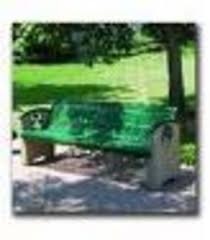
- A park bench. Get out of the house and smell the fresh air. Listen to the chirping birds. Look for squirrels gathering nuts. Watch the dogs romp and catch Frisbees. That’s it. No agenda. Just be in nature.
- Cell phone email access. Since the majority of us with elderly loved ones who rely on us sleep with our cell phones next to our nightstand “in case anything happens,” having email access on our phone offers even more peace of mind, especially in an emergency or in the middle of the night when sleep evades us.
- A window that lets the sunshine in. There’s something about standing near a window, and feeling the heat of the sun, especially in the winter. It feels good. It feels calming. And seeing the sun in the winter offers hope of flowers that bloom in the spring.
- Music. Music to sing to. Music to dance alone to. Music to cry to. Music to make love to. Music to exercise to. Music that reminds us we are so loved.
- Mindless activities. Solitaire card game. Jigsaw puzzle. Color-by-numbers. Not everything we family caregivers do has to be important. We’re allowed to goof off.
- Sleep. Hire someone to take over once a week so you catch a nap during the day or experience eight hours of uninterrupted sleep at night. If anyone ever asks if they can help you, and you can’t think of anything off hand, keep this one in mind.
- A positive outlook. Do you know someone who is upbeat and positive and has a way to make you smile? Pick up the phone (no emails) and tell your story; then listen to the way he or she can turn a negative situation into a positive one.
Subscribe to:
Posts (Atom)